
EPS vs UPS: What’s the Difference?
✅️What is UPS?
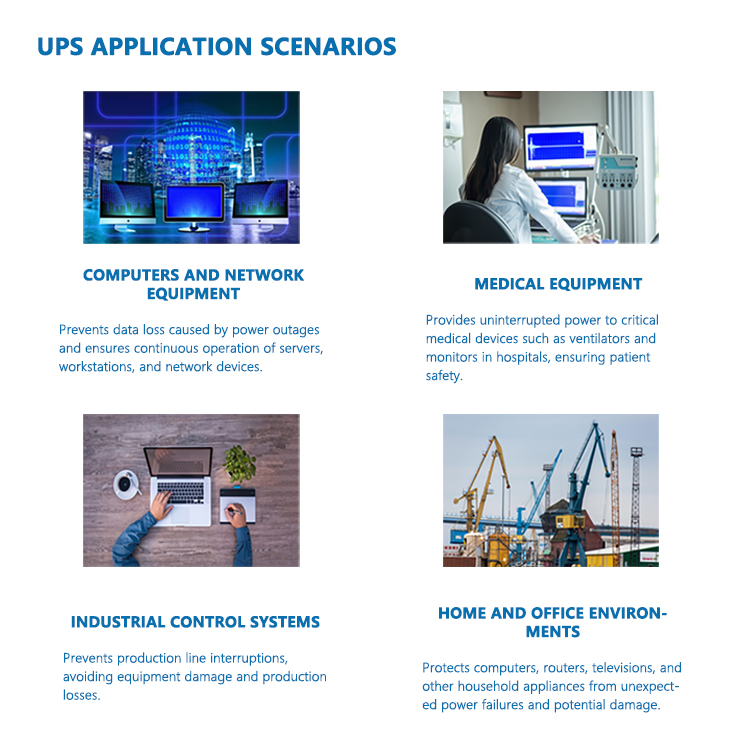
A Uninterruptible Power Supply (UPS) is designed to provide immediate, seamless backup power to sensitive electronic devices in the event of a power loss. When the main power fails, a UPS switches to battery power — ensuring no interruption for connected devices.
In addition to backup power, many UPS units also offer voltage regulation and surge protection, helping safeguard sensitive equipment against power fluctuations or spikes.
Typical use cases for UPS: computers, servers, networking equipment, medical devices, lab equipment, or any electronics that cannot tolerate even a brief outage.
✅️What is EPS?
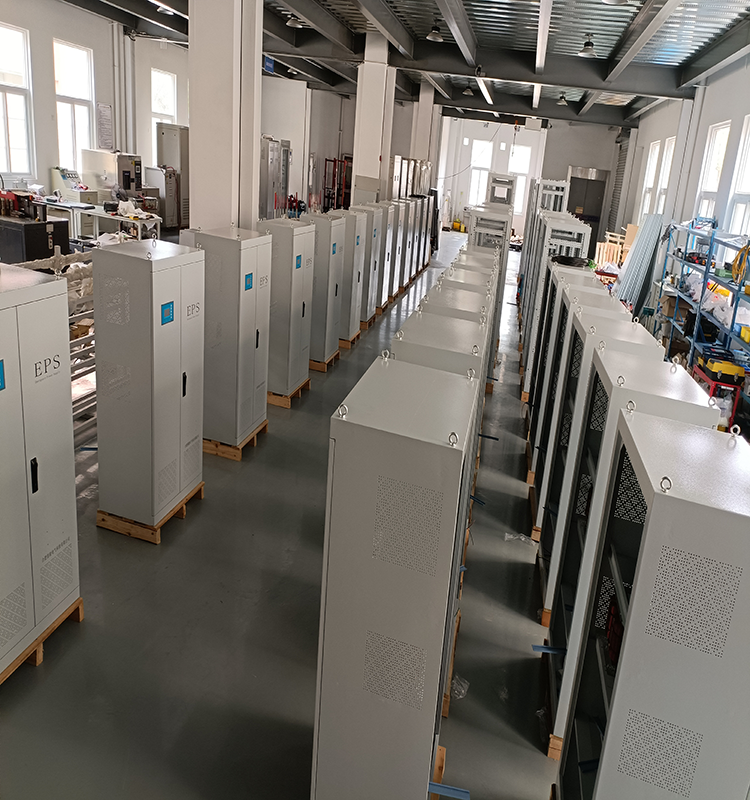
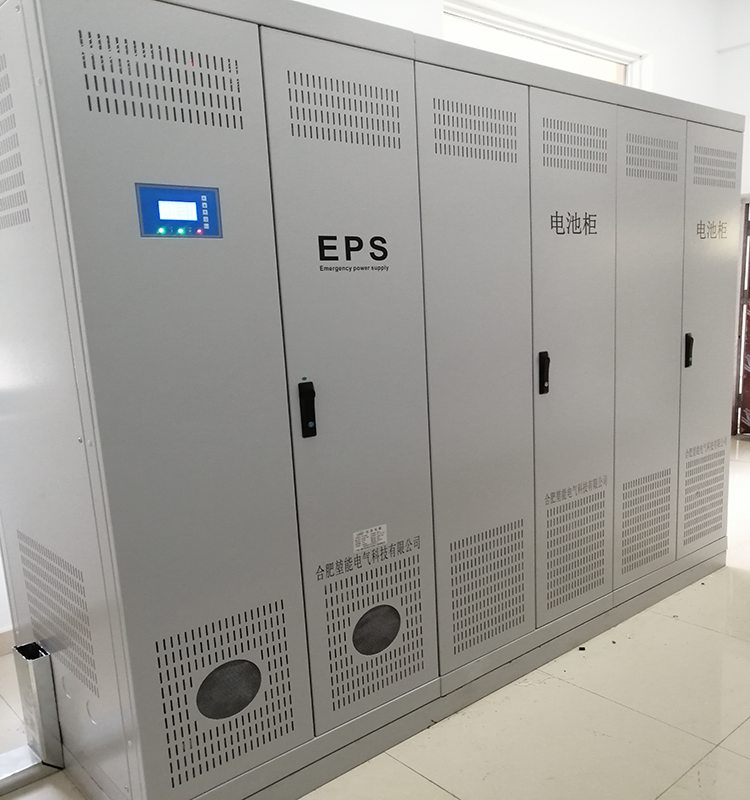
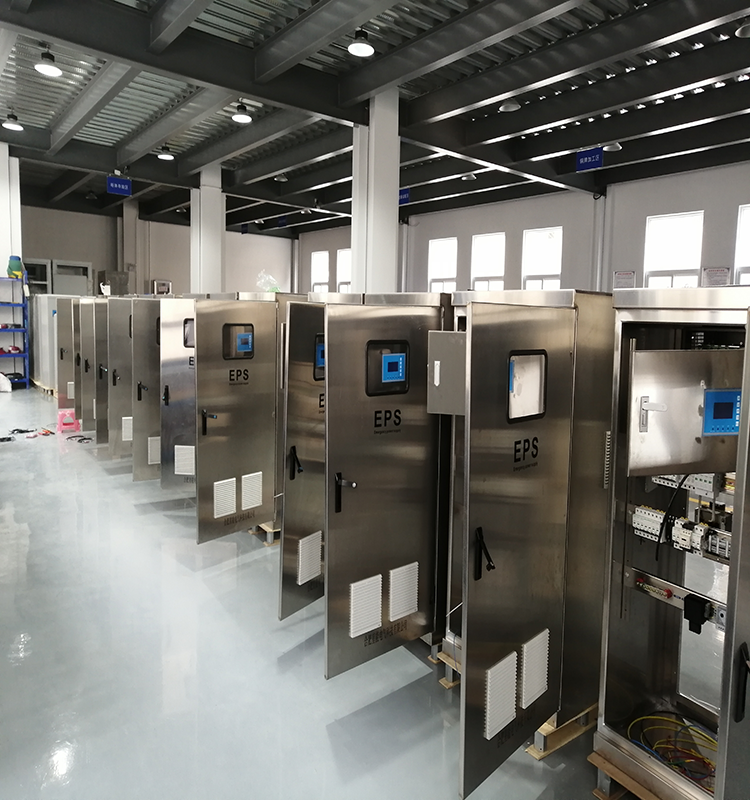
An Emergency Power Supply (EPS) is built to power critical safety or infrastructure systems — for example, emergency lighting, fire alarms, elevators, smoke extractors — during extended outages or emergencies.
Unlike UPS, an EPS typically remains idle during normal operation, only activating when mains power fails. It may rely on batteries or even a generator (or both) to deliver power.
EPS is designed to support heavy, variable loads — including inductive, resistive, or mixed loads — such as motors for elevators, pumps, lighting circuits, building-wide emergency systems, or other large-scale systems.
UPS vs EPS – Side-by-Side Comparison
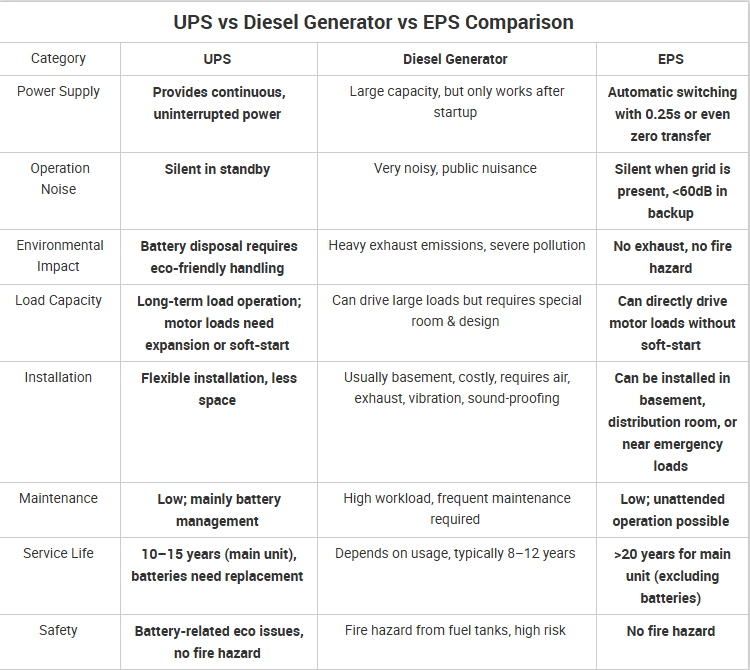
Why the Difference Matters
- For data-sensitive electronics (servers, computers, medical devices, lab gear, etc.), even a millisecond-level outage can cause data loss, corruption, or system instability. A UPS — with its near-instant switchover — protects against that risk.
- For safety-critical systems — like emergency lighting, fire alarms, elevators, ventilation, building-wide safety circuits — what matters most is reliability under extended outages. An EPS, capable of handling heavy/inductive loads and lasting longer, is often required (and often mandated by code in many buildings).
- In many enterprises or large buildings, a combination of UPS + EPS may provide the most comprehensive protection: UPS for sensitive electronics, EPS for infrastructure and safety systems. This layered approach ensures both operational continuity and safety standards compliance.
When to Choose UPS vs EPS — Which Is Right for You?
Choose UPS if:
- You need continuous, instantaneous power for sensitive electronics (computers, servers, lab equipment, medical devices, etc.).
- You care about data integrity, equipment safety, and uninterrupted performance during short outages.
- Your load is mostly capacitive/resistive and fairly predictable.
- You run a home office, small business, lab, or data center environment.
Choose EPS if:
- You need to power heavy, inductive or mixed loads — such as motors, pumps, elevators, lighting circuits, HVAC, or other building systems.
- You want long-term backup during extended outages (e.g., building-wide power cuts, emergencies).
- Your goal is life-safety support, building code compliance, or maintaining essential infrastructure during blackouts.
- You operate a large building, factory, hospital, or facility with safety systems.
Or consider both: For many enterprises or complex installations, combining UPS for electronics + EPS for infrastructure yields the broadest protection and resilience.
How This Fits with Sunlooker’s Approach
At Sunlooker, we believe reliable and intelligent power protection matters across all scales — from home offices to large enterprises. Our systems and distribution solutions are designed with flexibility in mind, allowing you to deploy the right combination of UPS and EPS depending on your needs.
- For sensitive equipment and data-critical devices (servers, workstations, lab devices), a UPS-based solution ensures uninterrupted operation.
- For emergency systems, building infrastructure, and heavy loads, our EPS-compatible solutions ensure safety and resilience under extended outages.
- For mixed environments — modern offices, commercial buildings, data centers — combining both ensures optimal protection: both uptime for sensitive electronics and safety for critical infrastructure.
We encourage users to assess what devices or systems they need to protect — and choose accordingly. In many cases, a hybrid strategy delivers the best balance of performance, safety, and cost-efficiency.
While both UPS and EPS provide backup power, they are designed with different priorities and applications:
- UPS focuses on instantaneous, clean, reliable power for sensitive electronics — ideal for short-term outages.
- EPS focuses on long-term, stable backup power for critical systems and infrastructure, ensuring safety and continuity during emergencies.
Understanding these differences — and matching the right solution to your needs — is key to building a robust power-protection strategy. At Sunlooker, we offer power and distribution solutions that align with both UPS and EPS demands, so you can trust your equipment and infrastructure remain safe, stable, and under control.